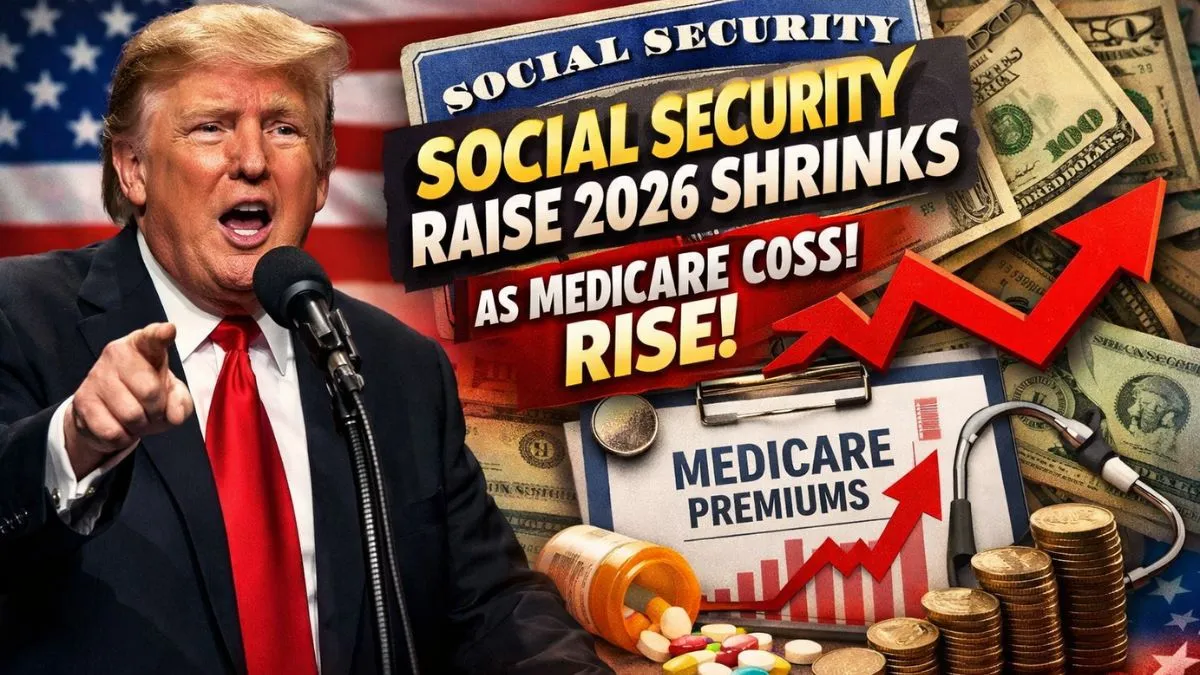
The Social Security Raise announced for 2026 initially sounded like welcome news for millions of retirees across the United States. Every year, the Social Security Administration adjusts payments through a cost-of-living adjustment (COLA) so benefits keep pace with inflation.
In January 2026, retirees received a 2.8% increase in Social Security benefits, slightly higher than the 2.5% COLA applied in 2025. On the surface, this seemed like a helpful financial boost for seniors. However, many retirees are discovering that the Social Security Raise is already being reduced by rising healthcare costs—especially the sharp increase in Medicare premiums.
For a large number of beneficiaries, the increase in monthly benefits is barely noticeable once healthcare expenses are deducted. Understanding how the Social Security Raise interacts with Medicare costs is important for retirees trying to manage their finances.
Why the Social Security Raise Matters for Retirees
Understanding COLA Adjustments
The Social Security Raise each year is based on the Cost-of-Living Adjustment (COLA). This adjustment is designed to help benefits keep up with inflation so retirees can maintain their purchasing power.
COLAs are calculated using the Consumer Price Index for Urban Wage Earners and Clerical Workers (CPI-W). If inflation rises during the third quarter of the year, Social Security benefits are increased the following January.
Key details about the recent Social Security Raise include:
| Year | COLA Percentage | Impact on Benefits |
|---|---|---|
| 2025 | 2.5% | Moderate increase in monthly checks |
| 2026 | 2.8% | Slightly higher boost than the previous year |
Although the Social Security Raise for 2026 is larger than last year’s adjustment, many retirees feel that it does not fully cover the rising cost of living.
Medicare Premiums Are Rising Faster
How Medicare Part B Affects the Social Security Raise
A major reason the Social Security Raise is disappearing for many seniors is the increase in Medicare Part B premiums. Most retirees enrolled in Medicare have their Part B premiums automatically deducted from their Social Security payments.
While Medicare Part A (hospital coverage) is usually free for most beneficiaries, Part B covers outpatient care and requires a monthly premium.
The premium change between 2025 and 2026 is significant.
| Year | Medicare Part B Premium | Increase |
|---|---|---|
| 2025 | $185 per month | — |
| 2026 | $202.90 per month | 9.7% increase |
The 9.7% jump in Medicare Part B premiums is far larger than the 2.8% Social Security Raise. As a result, much of the benefit increase is effectively canceled out.
For many seniors, the additional healthcare cost absorbs the majority of the COLA increase.
Healthcare Costs Are Increasing Overall
Seniors Are Skipping Essential Care
The impact of healthcare expenses extends beyond Medicare premiums. Many older Americans face rising costs for services that traditional Medicare does not fully cover.
According to the Senior Citizens League, approximately 57.6% of seniors skipped at least one healthcare service in the past year due to cost.
The most common services retirees are avoiding include:
- Dental care
- Vision exams
- Hearing aids
These services can be expensive and are often not covered by standard Medicare plans. As healthcare prices increase, the value of the Social Security Raise becomes even smaller.
Why the Social Security Raise Often Falls Short
Issues With the COLA Calculation Method
Another reason the Social Security Raise may not keep up with retirees’ expenses lies in the way COLAs are calculated.
The adjustment relies on the CPI-W index, which measures spending patterns of working adults, not retirees.
This creates two key problems:
- Healthcare costs receive less weight in CPI-W calculations.
- Workers and retirees spend money differently.
Older adults generally spend a much larger share of their income on healthcare compared to younger workers. Because healthcare costs are not heavily emphasized in CPI-W, the Social Security Raise often fails to reflect the true inflation experienced by seniors.
As a result, retirees frequently lose purchasing power even when benefits increase.
Strategies to Manage Rising Healthcare Costs
Review Medicare Plan Options
One way retirees can make the most of the Social Security Raise is by reviewing their Medicare coverage annually.
Medicare plans often change their:
- Drug formularies
- Coverage options
- Premium costs
Comparing plans during open enrollment may help seniors find lower premiums or better coverage.
Consider Medicare Savings Programs
Many states offer Medicare Savings Programs designed to help seniors with limited income.
These programs may cover:
- Medicare premiums
- Deductibles
- Copayments
Qualifying for these programs could help retirees preserve more of their Social Security Raise.
Discuss Cost-Saving Options With Healthcare Providers
Seniors may also reduce healthcare expenses by discussing alternatives with their doctors or pharmacists.
Possible cost-saving strategies include:
- Switching to generic medications
- Using pharmacy discount programs
- Choosing lower-cost treatment options
Taking these steps can help retirees stretch their Social Security Raise further.
The Bigger Financial Challenge for Retirees
Even though the Social Security Raise is intended to help retirees keep up with inflation, rising healthcare costs often erode its value. Medicare premiums, uncovered medical services, and increasing prescription drug prices can quickly consume the additional income.
Unless policymakers adjust the way COLAs are calculated—possibly by using an inflation index that better reflects seniors’ spending habits—retirees may continue to see their Social Security Raise disappear before it makes a meaningful difference in their budgets.
The Social Security Raise for 2026 brought a 2.8% increase in benefits, offering hope for retirees facing rising living costs. However, the simultaneous 9.7% increase in Medicare Part B premiums means many seniors will barely notice the extra income.
Combined with broader healthcare expenses and gaps in Medicare coverage, the financial reality for retirees remains challenging. Understanding how Medicare deductions affect Social Security payments and exploring ways to reduce medical costs can help seniors protect their finances.
While the Social Security Raise is designed to keep benefits aligned with inflation, its impact often depends on how quickly healthcare expenses continue to grow.
FAQs
1. Why does the Social Security Raise feel smaller than expected?
The Social Security Raise may feel smaller because Medicare premiums and other healthcare costs are increasing faster than Social Security benefits.
2. How much did Medicare Part B increase in 2026?
The standard Medicare Part B premium increased from $185 to $202.90 per month, which represents a 9.7% increase.
3. Can seniors reduce healthcare costs despite rising premiums?
Yes. Retirees may reduce costs by reviewing Medicare plans annually, applying for Medicare Savings Programs, and choosing generic medications when possible.