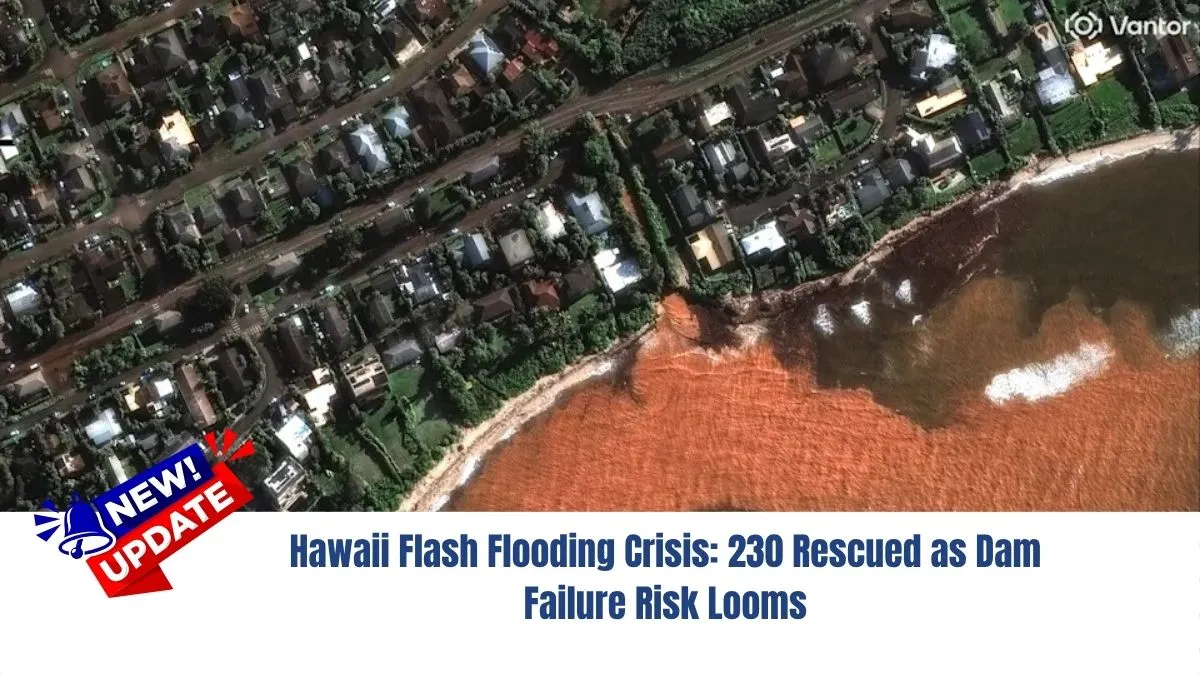
The recent Hawaii flash flooding has created a major emergency across Oahu, where intense rainfall caused severe destruction, mass evacuations, and fears of a possible dam failure. Authorities rushed to rescue stranded residents as rising water levels threatened communities, especially near the aging Wahiawa dam.
Severe Flooding Hits Oahu Communities
Heavy Rains Trigger Widespread Damage
Torrential rains battered the Hawaiian island of Oahu, leading to the worst flooding the region has experienced in nearly 20 years. Streets were submerged, homes were displaced from their foundations, and several vehicles were swept away by fast-moving waters.
Officials reported that the disaster could cause damages exceeding $1 billion, highlighting the seriousness of the Hawaii flash flooding situation.
Mass Rescues and Emergency Response
Over 230 People Brought to Safety
Emergency teams rescued more than 230 individuals trapped by rising floodwaters. Rescue operations included both air and water missions, although these efforts were briefly disrupted by civilians flying personal drones in restricted areas.
Additionally, the National Guard and Honolulu Fire Department successfully evacuated 72 children and adults from a youth camp on Oahu’s west coast after floodwaters cut off access routes.
Wahiawa Dam Raises Alarm
120-Year-Old Structure at Risk
The Wahiawa dam, built in 1906, became a major concern as water levels rose rapidly. Within 24 hours, water levels increased from 79 feet to 84 feet, just six feet below its maximum capacity.
Authorities warned residents living downstream to evacuate immediately due to the risk of imminent failure, although water levels later began to recede. However, officials cautioned that additional rainfall could quickly worsen the situation.
Evacuations and Public Safety Measures
Thousands Ordered to Leave Homes
Approximately 5,500 residents were placed under evacuation orders as sirens echoed across Oahu’s North Shore. Emergency shelters were also affected, with one shelter requiring relocation due to flooding conditions.
Despite the severity of the Hawaii flash flooding, no fatalities were reported. However, around 10 individuals were hospitalized for hypothermia.
Impact Extends Beyond Oahu
Maui Also Faces Risk
In Maui, evacuation advisories were issued in parts of Lahaina as nearby retention basins approached capacity. These areas are particularly vulnerable, having already suffered damage from the devastating 2023 wildfire.
Weather Conditions and Ongoing Threat
Kona Lows Intensify Rainfall
Meteorologists attribute the heavy rainfall to “Kona lows”, winter storm systems that bring moisture-rich air from the south. Some areas of Oahu recorded between 8 to 12 inches of rain overnight, while the island’s highest peak, Kaala, received nearly 16 inches within a day.
Experts also note that climate change is increasing the intensity and frequency of such extreme weather events, contributing to disasters like the current Hawaii flash flooding.
Dam History and Safety Concerns
Aging Infrastructure Under Scrutiny
The Wahiawa dam has long been considered a high-risk structure. It was originally built to support sugar production and was reconstructed after collapsing in 1921.
Since 2009, the state has issued multiple warnings regarding safety deficiencies. In recent years, authorities have planned to acquire and upgrade the dam, allocating $26 million for improvements. However, the transfer of ownership has not yet been finalized.
The ongoing Hawaii flash flooding crisis highlights the growing risks posed by extreme weather and aging infrastructure. While emergency teams have successfully rescued hundreds and prevented loss of life, the threat remains far from over.
Continued rainfall, combined with vulnerable systems like the Wahiawa dam, means residents must stay alert and prepared. This disaster serves as a reminder of the urgent need for improved infrastructure and climate resilience to protect communities in the future.